GEO for Webflow: How to Optimize Your Site for AI Search (ChatGPT, Perplexity & Google AI)



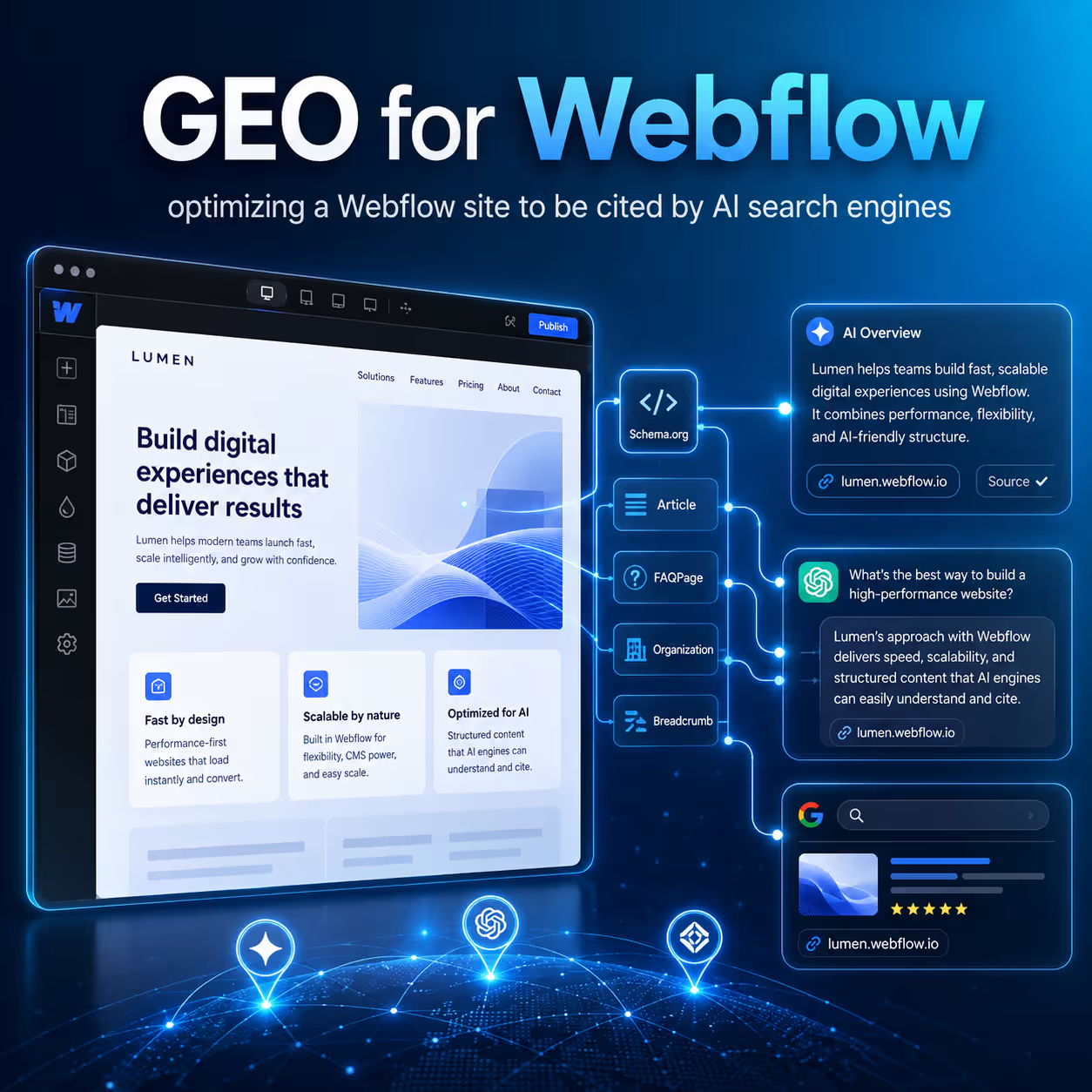
GEO (Generative Engine Optimization) is the practice of structuring your site so AI search engines — ChatGPT, Perplexity, Google AI Overviews, Gemini, and Claude — quote it when they answer a question. It's the next layer on top of SEO: instead of only ranking a blue link, you become the source the model cites.
For a Webflow site this is very doable, because Webflow gives you clean HTML, fast pages, and control over structured data. This guide covers exactly how to make your Webflow content citable — the on-page patterns, the technical setup, and the off-site signals.
GEO vs SEO: what's actually different?
SEO optimizes to rank a page for a query. GEO optimizes to be extracted and cited inside an AI-generated answer. The overlap is large — both reward quality, structure, and authority — but GEO leans harder on answer-first phrasing, clear definitions, entity-rich language, structured data, and being referenced across the wider web, not just your own site.
Why it matters now?
A growing share of searches never reach a classic results page — the user gets an AI answer directly. If your content isn't structured to be quoted, you're invisible in that answer even when you rank well in the blue links. GEO protects and extends your visibility as search shifts.
On-page: make your Webflow content easy to quote
AI models extract short, self-contained, factual passages. Structure your Webflow content so those passages are easy to lift:
- Answer-first. Put a direct, one-paragraph answer right under each heading, before the detail. Models grab the first clear answer.
- Question-shaped headings + FAQs. Use real questions as H2/H3s and add an FAQ section. "How do you connect Webflow forms to HubSpot?" is quotable; "Integration overview" is not.
- Entity-rich language. Name the specific tools and concepts (Webflow, HubSpot, n8n, Make, Supabase). Entities help models connect your content to the query.
- Definitions. Define key terms in a single sentence — models love a clean "X is…" statement.
- Comparison tables. Structured tables (tool vs tool) are extracted verbatim into answers.
- Clean semantic HTML. Proper h1–h3, lists, and tables (which Webflow's rich text produces) beat walls of text.
Rule of thumb: if a human skimming your page could copy one paragraph as the answer, an AI can too.
Add FAQ structured data
Mark up your FAQs with FAQPage JSON-LD so both Google and AI systems parse them cleanly. In Webflow, add it via an Embed element or the page's custom code:
<script type="application/ld+json">
{
  "@context": "https://schema.org",
  "@type": "FAQPage",
  "mainEntity": [{
    "@type": "Question",
    "name": "How do you connect Webflow forms to HubSpot?",
    "acceptedAnswer": {
      "@type": "Answer",
      "text": "Capture the Webflow submission via webhook, map fields to HubSpot properties, dedupe by email, and sync with an upsert so you never create duplicate contacts."
    }
  }]
}
</script>
Want to apply this to your setup?
Technical GEO: crawlability, schema, and llms.txt
AI engines can only cite what they can crawl and understand. Cover the technical basics.
Let the AI crawlers in
Check your robots.txt allows the major AI bots — blocking them means zero citations. A permissive allowlist:
Ship structured data site-wide
Use Organization and WebSite schema on the homepage, and Article/BlogPosting on content pages. It tells models who you are and what each page is — the backbone of entity recognition.
Add an llms.txt
An /llms.txt file is an emerging convention: a plain-text map of your most important pages and what they cover, so AI systems can find your best content fast. Low-effort, future-proofing.
Don't forget off-site
LLMs synthesize from across the web, so being mentioned and cited elsewhere — directories, roundups, communities, reviews — matters as much as your own pages. Consistent brand mentions teach models to associate your name with your topic.
Q: What is GEO (generative engine optimization)?
A: GEO is optimizing your content so AI search engines like ChatGPT, Perplexity, and Google AI Overviews quote it in their answers. It builds on SEO with answer-first structure, schema, entity-rich language, and off-site citations.
Q: How is GEO different from SEO?
A: SEO aims to rank a page; GEO aims to be extracted and cited inside an AI-generated answer. They overlap heavily, but GEO weights answer-first phrasing, structured data, and third-party mentions more.
Q: Can a Webflow site rank in AI search?
A: Yes. Webflow's clean HTML, fast pages, and structured-data control make it well suited to GEO. Add answer-first content, FAQ schema, open AI-crawler access, and consistent off-site citations.
Want your Webflow site optimized for AI search?
Webflowforge builds SEO- and GEO-ready Webflow sites and AI workflow implementation — including RAG agents and structured, citable content wired into automated workflows. We also bake GEO into every WordPress to Webflow migration. Tell us about your project and we'll scope it with you.
Related: How to Add an AI Chatbot (RAG Agent) to Your Webflow Site · Webflow AI Automation: 7 Practical Ways