%20(2).svg)

Pinecone Exposes the Dangerous Myth of Stable Retrieval
The first time your Pinecone index drifts, you don’t notice it in the dashboards; you notice it when a perfectly reasonable question starts getting “almost right” answers pulled from yesterday’s schema and last quarter’s product names, because embeddings don’t fail loudly, they just keep returning something.
Silently wrong results.
In most teams, the retrieval layer gets treated like plumbing: provision it once, pipe vectors in, and assume “search” is handled, but Pinecone turns that assumption into an operational workflow whether you admit it or not, because every change upstream changes what “relevant” means downstream.
Relevance is political.
The workflow shift isn’t that RAG exists; it’s that retrieval must be rebuilt on purpose, like a release artifact, not “whatever is currently indexed,” and Pinecone makes this painfully clear the moment you try to run multiple environments, run A/B tests on chunking strategies, or keep a regulated audit trail of what content was eligible for an answer on a given date.
Now it’s ops.
The mature pattern looks less like “index documents” and more like “ship retrieval”: you version namespaces, you snapshot corpora, you promote indexes between staging and prod, you run offline evaluation jobs, and you treat embedding model changes as migrations with rollback plans.
Deploy retrieval, too.
Pinecone is good at being fast and boring at scale, but it doesn’t save you from the messy part: deciding what gets embedded, when it expires, how deletions propagate, and how you prove to yourself that the top-k results are stable enough to trust in front of customers.
Trust is earned.
If your AI answers keep wobbling, stop blaming the model first; your workflow is probably letting retrieval mutate without supervision, and Pinecone is just the place where that mutation becomes visible.
Fix the pipeline.
Operationalize Retrieval Versioning for Audit and Rollback
Maya’s day starts with a pager, not a standup. She’s the DevOps engineer who inherited “the RAG thing” because it runs in Kubernetes and therefore must be hers. Overnight, sales demoed a new pricing tier. This morning, customers are asking about it. The assistant answers confidently, citing the old tier name and a discount that ended months ago.
Nothing is down. Latency is fine. Pinecone graphs look green. So what broke?
She traces it to a quiet change: someone re-embedded the entire corpus with a newer embedding model to “improve quality,” but didn’t bump the namespace or pin the retriever config. The index is now a blend of old and new vectors, different dimensions of meaning pretending to be the same. Search still returns results. Just not the right ones.
She rolls back the application. No change. Because the app wasn’t the release artifact. Retrieval was.
By lunch she’s running an emergency job: export yesterday’s source snapshot, rebuild a clean index in staging, and run a quick offline evaluation against a set of saved questions from support tickets. The evaluation isn’t fancy. It just tells her whether the top-5 contains the exact policy doc that humans used to answer. Today it doesn’t. Yesterday it did.
The hurdle hits again when legal asks, “What content was eligible when that answer was generated?” Maya realizes they never stored index version metadata with the response. There’s no audit trail. No proof. Just vibes.
She ships a fix that feels boring but changes everything: every embed job writes to a new namespace version, every answer logs the namespace and corpus snapshot ID, deletions go through a tombstone queue with a verification sweep, and promotion from staging to prod is a deliberate step with a rollback pointer.
Is this overkill for “search”? Or is it the minimum bar once customers treat the assistant like it’s official?
By 6 p.m., answers stop wobbling. Not because the model got smarter. Because retrieval finally stopped mutating in the dark.
Sell Retrieval Stability with Snapshots and Release Gates
Contrarian take: stop treating retrieval stability as an internal hygiene project. Treat it like a product you can sell, because most teams are quietly bleeding time and credibility on the exact failure Maya hit. The model gets blamed, support tickets pile up, and nobody can answer the one question that matters in a grown-up company: which corpus, which embedder, which retriever settings, on which date, produced that answer.
If we ran a mid-sized fintech, I would not aim for the perfect RAG stack first. I would aim for a Retrieval Bill of Materials. Every response gets a compact manifest: corpus snapshot ID, namespace version, embedding model, chunking profile, top-k, and a hash of the prompt template. Not for vanity. For audits, rollbacks, and sanity. When legal asks, we don’t scramble. When marketing renames a plan, we can prove when the assistant learned the new name.
There’s a business hiding here: a retrieval release manager that sits next to Pinecone, not inside it. You point it at your doc sources and it produces immutable snapshots, runs an evaluation suite you can actually read, and promotes retrieval the same way you promote a container image. It also owns deletions: tombstones with verification sweeps and an SLA that says when the old content stops being eligible.
If we built this from scratch, I would start with a thin service and one job runner. First feature: create snapshot, embed into a new namespace, record metadata in a registry table. Second feature: run offline checks against a saved set of questions and expected source docs. Third feature: a simple approval gate that blocks production promotion when retrieval quality regresses. Charge per environment and per evaluated question set, because that maps to real operational load.
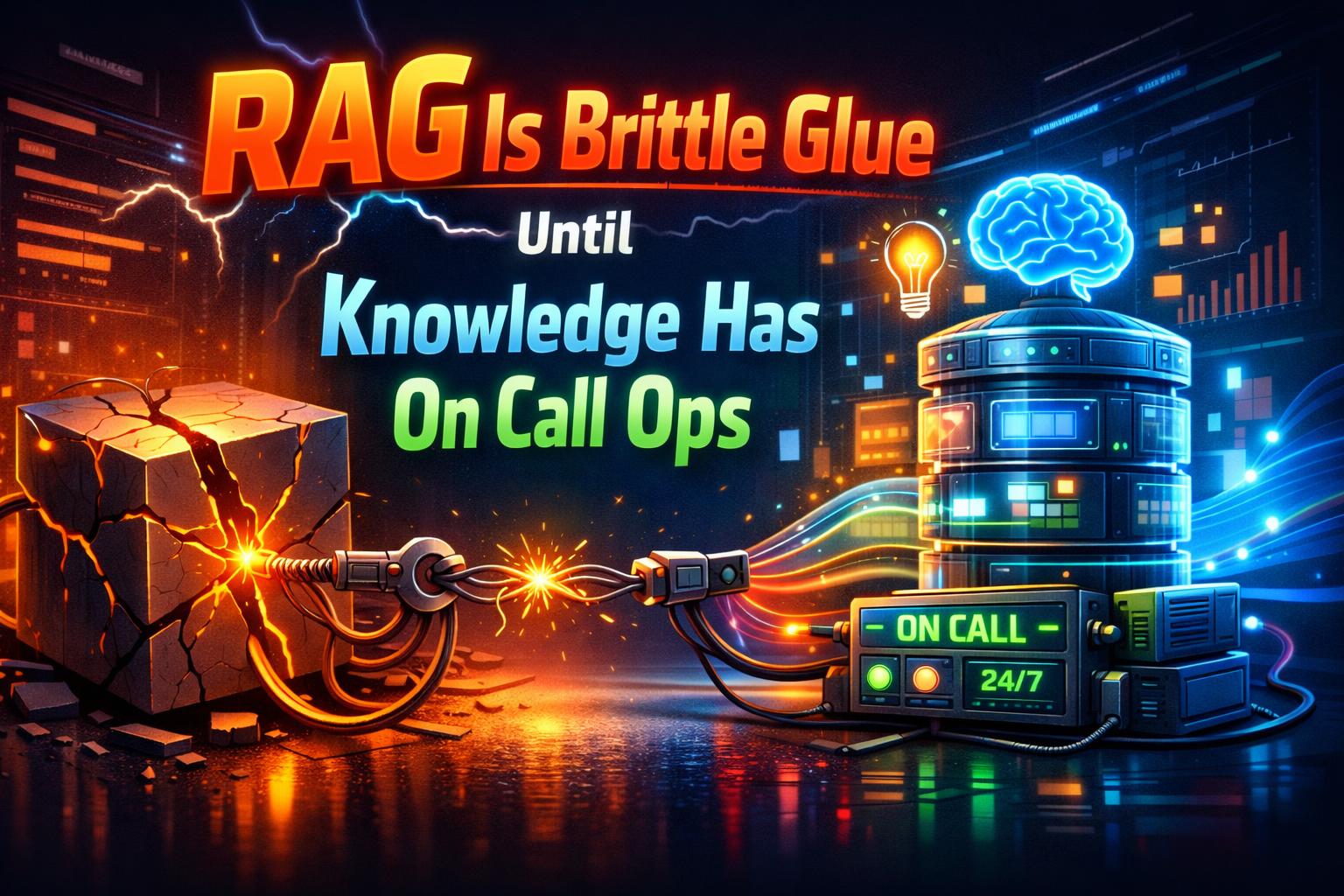
The status quo says retrieval is plumbing. I think retrieval is release engineering, and whoever makes it boring wins.
Related Posts


.png)

Contact Us
- Webflow\Wordpress\Wix - Website design+Development
- Hubspot\Salesforce - Integration\Help with segmentation
- Make\n8n\Zapier - Integration wwith 3rd party platforms
- Responsys\Klavyo\Mailchimp - Flow creations
.svg)